Skip to content

Table of Contents
- Introduction
- What Is Shopify Dropshipping?
- Why Shopify Is the Preferred Platform for Dropshipping
- How Shopify Dropshipping Works
- The Biggest Myths About Shopify Dropshipping
- Choosing the Right Products for Shopify Dropshipping
- Building a Trustworthy Shopify Dropshipping Store
- Pricing Strategy for Shopify Dropshipping
- Marketing a Shopify Dropshipping Store
- Customer Support: The Silent Profit Killer
- Common Mistakes in Shopify Dropshipping
- Is Shopify Dropshipping Still Worth It?
- Final Thoughts
Shopify Dropshipping: A Complete, Practical Guide to Building a Profitable Online Store
Dropshipping has transformed the way people start online businesses, and among all ecommerce platforms, Shopify has become the go-to choice for entrepreneurs entering this space. The reason is simple: Shopify removes much of the technical friction that traditionally came with building and managing an online store, allowing sellers to focus on product research, branding, and marketing.
Shopify dropshipping is often described as “easy,” but that description can be misleading. While the model lowers barriers to entry, success still depends on planning, execution, and long-term thinking. This guide breaks down Shopify dropshipping in a realistic and practical way covering what it is, how it works, what beginners get wrong, and how to build a sustainable business rather than a short-lived experiment.
What Is Shopify Dropshipping?
Shopify dropshipping is an ecommerce business model where you sell products through a Shopify store without holding inventory yourself. Instead, when a customer places an order, the product is fulfilled by a third-party supplier who ships it directly to the customer.
Your role as the store owner is to:
- Build and manage the online store
- Choose and market products
- Handle customer support and branding
- Set pricing and profit margins
You never physically touch the product, which makes the model appealing for first-time entrepreneurs and small teams.
Why Shopify Is the Preferred Platform for Dropshipping
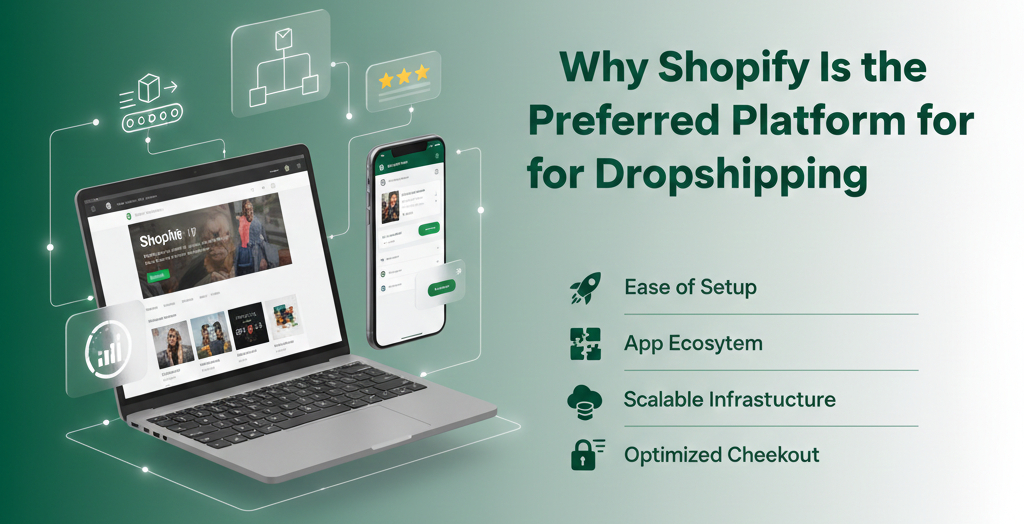
There are many ecommerce platforms available, but Shopify stands out for dropshipping for several reasons:
1. Ease of Setup
You can launch a Shopify store in a matter of hours without writing a single line of code. The admin interface is clean, intuitive, and designed for non-technical users.
2. App Ecosystem
Shopify’s app store offers thousands of integrations for sourcing products, managing fulfillment, running ads, handling reviews, and automating customer communication. This ecosystem is a major advantage over custom-built solutions.
3. Scalable Infrastructure
A Shopify dropshipping store can start small and scale to thousands of orders per day without needing major technical changes. Hosting, security, and performance are handled by Shopify.
4. Built-In Payment and Checkout Optimization
Shopify’s checkout is fast, secure, and trusted globally. This improves conversion rates, especially for new stores that lack brand recognition.
How Shopify Dropshipping Works (Step by Step)
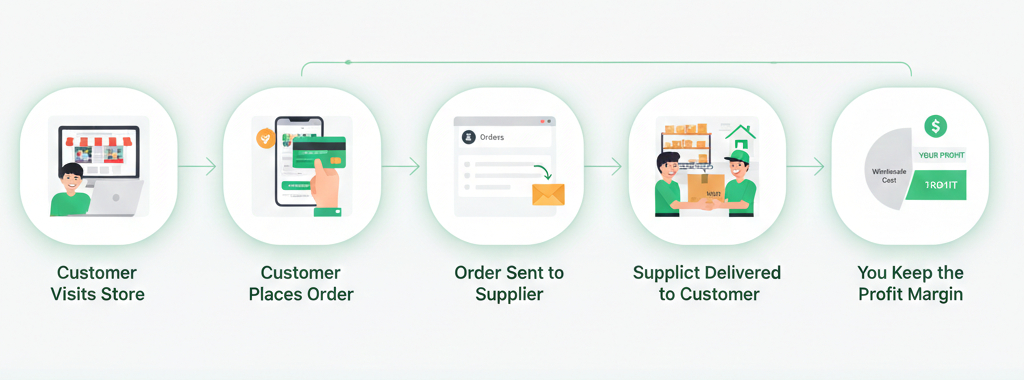
Understanding the workflow is critical before you invest time or money.
- Customer visits your Shopify store
They browse products, read descriptions, and place an order. - Order is paid for at retail price
You receive the full payment from the customer. - Order is forwarded to the supplier
You pay the supplier the wholesale cost of the product. - Supplier ships the product directly
The product is shipped under your store’s name in most cases. - You keep the profit margin
The difference betw
The Biggest Myths About Shopify Dropshipping
Many people fail in dropshipping because they start with unrealistic expectations. Let’s clear up some common myths.
Myth 1: Dropshipping Is Passive Income
Dropshipping requires ongoing effort especially in marketing, customer support, and optimization. It is not a “set and forget” business.
Myth 2: Any Product Will Sell
Product selection is one of the most critical success factors. Poor product research leads to wasted ad spend and no sales.
Myth 3: Cheap Products Mean Easy Profits
Low-priced products often come with low margins, high refund rates, and customer dissatisfaction. Sustainable stores focus on perceived value, not just low cost.
Choosing the Right Products for Shopify Dropshipping
Product selection can make or break your store.
Characteristics of Good Dropshipping Products
- Solve a clear problem or fulfill a strong desire
- Lightweight and easy to ship
- Not easily found in local stores
- Have room for branding and differentiation
- Sell in the mid-range price bracket (£20–£80)
Avoid These Product Types
- Electronics with warranty risks
- Fragile items prone to damage
- Copyrighted or trademarked products
- Oversaturated “trending” products with no brand angle
Successful Shopify dropshipping stores often focus on a niche rather than a general store. A niche allows for clearer messaging, better branding, and higher customer trust.
Building a Trustworthy Shopify Dropshipping Store
Trust is one of the biggest conversion factors, especially for new stores.
Essential Pages You Must Have
- About Us (with a real brand story)
- Contact Us (email, form, or phone)
- Shipping Policy (clear timelines)
- Returns & Refund Policy
- Privacy Policy and Terms of Service
Design Matters More Than You Think
A clean, fast, and professional theme can dramatically impact conversion rates. Avoid clutter, excessive popups, and aggressive countdown timers.
Your goal is to look like a real brand not a quick dropshipping experiment.
Pricing Strategy for Shopify Dropshipping
Pricing is not just about covering costs.
Key Factors to Consider
- Product cost
- Shipping cost
- Transaction fees
- Advertising cost
- Refund and chargeback risk
Many beginners price products too low, leaving no room for ads or customer service costs. A healthier approach is to price for sustainability, not just competitiveness.
Marketing a Dropshipping Store
Even the best store won’t succeed without traffic.
Paid Advertising
Most dropshipping stores rely on:
- Social media ads
- Search ads for high-intent keywords
- Retargeting campaigns
Paid ads require testing. Expect to spend money before finding winning creatives and audiences.
Organic Traffic (Often Overlooked)
Content marketing, SEO, and social presence take longer but create long-term value. A blog, product guides, and educational content can build authority and reduce dependency on ads.
Customer Support: The Silent Profit Killer
Poor customer support is one of the fastest ways to kill a dropshipping store.
Best Practices
- Set realistic delivery expectations
- Respond quickly to emails and messages
- Handle refunds professionally
- Communicate delays honestly
Happy customers are more forgiving of shipping delays than unhappy ones who feel misled.
Common Mistakes in Dropshipping
Avoiding these mistakes can save months of frustration:
- Launching without validating products
- Copy-pasting supplier descriptions
- Ignoring site speed and mobile optimization
- Using fake or misleading reviews
- Scaling ads too fast without backend optimization
Most failed dropshipping stores don’t fail because the model is broken they fail because of poor execution.
Is Dropshipping Still Worth It?
Yes but not in the way it was marketed years ago.
The era of quick wins and copy-paste stores is largely over. Today, successful dropshipping businesses are:
- Brand-focused
- Customer-centric
- Data-driven
- Built for long-term growth
If you approach dropshipping as a real business rather than a shortcut, it remains a powerful entry point into ecommerce.
Final Thoughts
Dropshipping is not a scam, not dead, and not a guaranteed success. It is a legitimate business model that rewards those who treat it seriously.
With the right product, a trustworthy store, clear communication, and consistent optimization, dropshipping can become a profitable and scalable ecommerce venture. The key is patience, learning from data, and building something customers actually want to buy from.