Skip to content

Magento Performance Tuning: Understanding VCL Hashing and X-Vary
Most Magento performance issues aren’t infrastructure problems they’re cache key problems. And in many cases, the root cause is X-Magento-Vary.
Teams often scale servers, add RAM, or upgrade CPUs when the real issue is cache fragmentation happening silently at the hash level.
The Core Problem: Cache Key Explosion
In a Magento + Varnish setup, magento performance depends heavily on how efficiently pages are reused from cache.
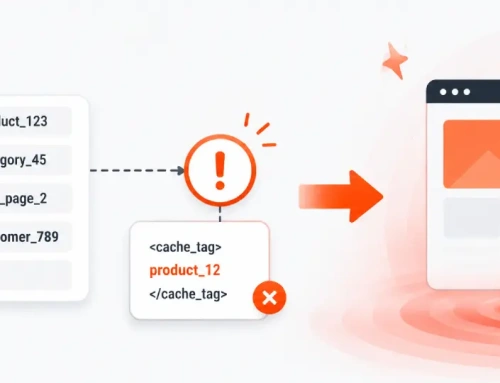
When extra context, cookies, or noisy query parameters enter the cache key, Varnish starts storing multiple versions of the same page.
Example scenario:
A category page that should have:
- 1 cached version per store
Ends up having:
- Multiple versions per currency
- Multiple versions per customer group
- Additional variants due to cookies
- More variants due to tracking query parameters
Very quickly, a single URL can have 10–20 cached objects.
Result:
- Lower hit ratio
- Higher backend load
- Increased memory consumption
- Slower response times under traffic spikes
This isn’t an infrastructure limitation. It’s uncontrolled variability.
Understanding X-Magento-Vary
Magento’s caching model is actually well designed when used correctly.
The intended flow:
- Variability is normalized into HttpContext
Magento emits a consolidated header: X-Magento-Vary
Varnish hashes only that header (not raw cookies)
This keeps cache variation controlled and predictable.
Proper cache dimensions should be bounded, such as:
- Store
- Currency
- Customer group
If a dimension grows with sessions, users, or marketing campaigns, it should not enter the hash.
Why Stores Break This Model
Common causes of hash explosion:
- Third-party modules adding custom context keys
- Raw cookies being hashed directly
- Tracking parameters not normalized
- User-specific data rendered server-side instead of via private content
Each of these increases the number of possible cache combinations.
The dangerous part?
This fragmentation usually happens quietly. There’s no visible error, just degraded magento performance.
How to Diagnose Cache Fragmentation
You can detect issues early with simple checks:
- Inspect the X-Magento-Vary header in response headers
- Review HttpContext logs
- Use varnishlog to count how many variants exist per URL
If a page shows 10–20 cached objects, the cache key is already unstable.
A healthy system should have tightly controlled, predictable variants.
Clean Cache Architecture
A stable Magento caching strategy follows these principles:
1. Control Context Inputs
Whitelist allowed HttpContext keys.
Block or rewrite rogue contributors using a plugin.
Only allow necessary dimensions:
- Store
- Currency
- Customer group
Nothing session-based.
2. Normalize Requests in VCL
- Strip unnecessary cookies
- Remove tracking parameters
- Normalize query strings
Varnish should see identical pages as identical requests.
3. Use Private Content Correctly
User-specific elements (cart count, welcome message, recently viewed products) should be handled via Ajax/private content, not by creating new cache variants.
Never hash raw cookies directly.
The Real Takeaway
When X-Magento-Vary is controlled, magento performance improves dramatically:
- Higher cache hit ratio
- Lower backend CPU usage
- Better stability under traffic
- Reduced infrastructure cost
Before upgrading servers, always inspect your hash strategy.
In many cases, fixing X-Vary delivers bigger gains than adding more infrastructure.