Skip to content

How Shopify App Development Helps Brands Scale Faster in 2026

Getting Started with Shopify Apps
In terms of infrastructure, the app ecosystem makes up much of the overall Shopify platform. Just like the roads, bridges, and utilities in a city, applications run everything behind the scenes; from frictionless checkout experiences to automated fulfillment processes.
As of 2026, developing apps for Shopify is not just something to add onto your business; it has become a state of growth for companies wanting to deliver efficient, personalized and scalable solutions to their customers within an ever-changing and competitive eCommerce landscape.
Shopify offers merchants greater flexibility than ever before in meeting the evolving expectations of consumers and the complexities of operating their businesses by allowing them to use existing apps to adapt to the marketplace instead of having to redevelop their entire store from the ground up.
The Reason for Shopify’s Growth in eCommerce
The reason Shopify is growing and dominating eCommerce today is because of its merchant-centric philosophy of providing the fastest checkout experience possible, and their continued investment in improving the speed at which they bring new applications to market (such as a complete and hybrid [Headless] commerce platform with comprehensive APIs and built-in artificial intelligence (AI), etc.).
These same improvements will enable Shopify to be used by single founders, rapidly expanding Direct-To-Consumer (DTC) businesses, and large enterprises.
With millions of active stores globally and a massive developer ecosystem, Shopify remains one of the most future ready eCommerce platforms in 2026.
Apps Are Essential For Your Shopify Store To Grow
While you can do everything within the base Shopify store out of the box, integrating third party apps can really enhance (and sometimes render) the potential of your storefront. Third party apps can be used for things like recovering abandoned cart sales, tracking inventory in real-time, loyalty programs, upsell/cross-sell opportunities, reporting and so much more.
When pre-existing applications don’t have the ability to accommodate a specific workflow or business model, you have the option of custom Shopify application development to create new apps that help you turn operational roadblocks into a competitive edge.
What Is Shopify App Development
Shopify app development is the process of developing applications that enhance the base functionality of a Shopify store. These new applications will integrate into Shopify’s existing ecosystem to address specific operational issues, marketing, or customer experience challenges.
Understanding Shopify Apps
Shopify apps extensions act similarly as traditional plug-in applications, but they are more sophisticated. They assist users in automating many repetitive operations, enhancing the experience of using front-end (customer-facing) applications, managing back-end (business/administrative) operations, and integrating with external tools (such as enterprise resource planning, customer relationship management, and order fulfilment systems).
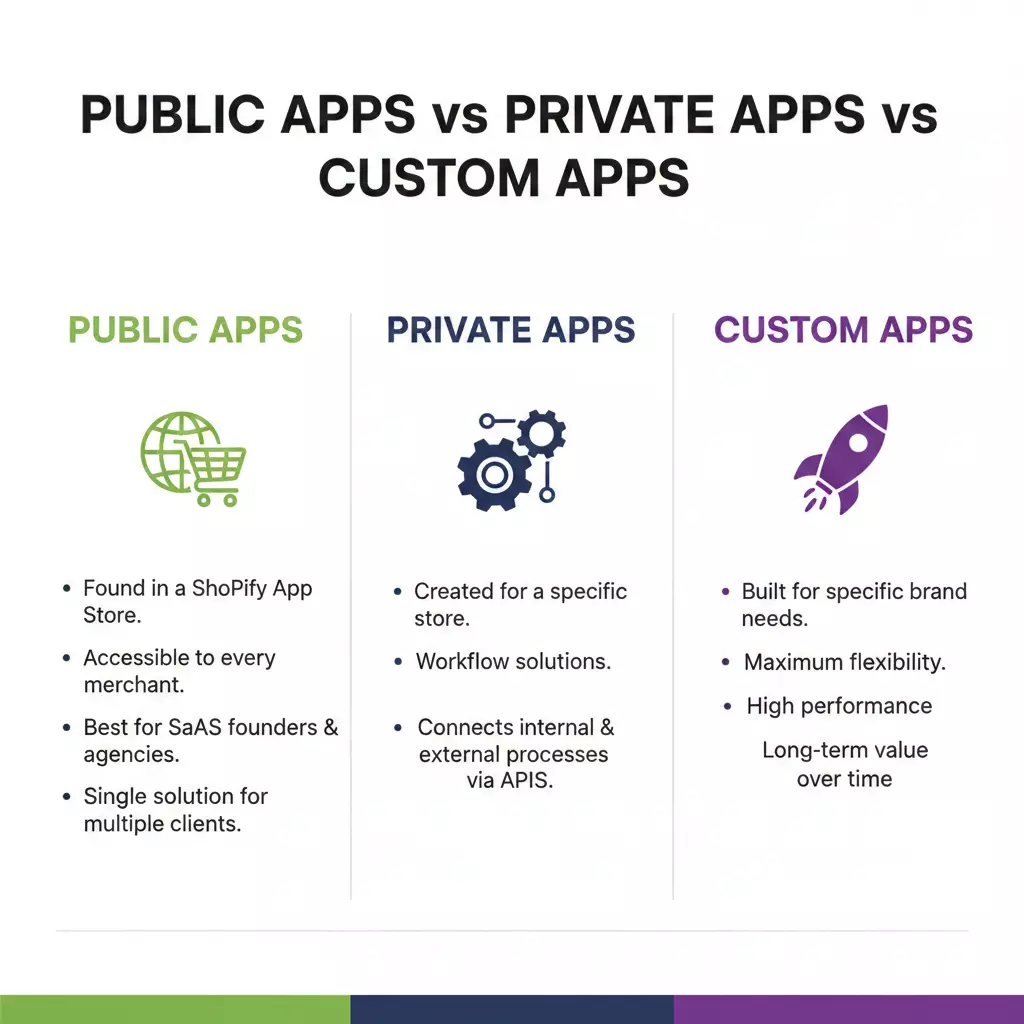
Public Apps vs Private Apps vs Custom Apps
Public apps can be found in the Shopify App Store, allowing every merchant access to the available apps. They are typically best suited for Shopify SaaS founders and agencies who wish to offer a single solution to multiple clients.
Private Apps are created for a specific store to offer workflow solutions and connect internal processes to external processes through APIs.
Custom Apps are built to meet the specific needs of a brand. Custom apps offer maximum flexibility, performance, and value over time.
Why Shopify App Development Matters in 2026
With more demanding consumers than ever before, it is imperative that all aspects of the shopping experience offer speed, relevance, and convenience. In this way, apps for Shopify can provide these benefits, which would otherwise reduce productivity.
Increasing Need for Customization of Shopping Carts
There has been a rapid decline in sales of generic shopping carts due to the increased expectations of today’s consumers. Today’s Shopify applications allow merchants to provide customers with bespoke product recommendations, flexible pricing, targeted promotions, and personalized checkout processes that can be modified on-the-fly for each customer.
The Use of Automation To Scale Your Business
Slow growth can result from the use of manual operations as opposed to using apps to handle order management, update inventory levels, execute marketing campaigns, and generate reports. With these types of applications, retailers can rapidly increase their productivity without increasing costs.
Types of Shopify Apps You Can Build
Public Shopify Apps
These apps are designed for multiple merchants and generate revenue through subscriptions or usage based pricing. They are ideal for solving common eCommerce challenges at scale.
Private Shopify Apps
Private apps focus on internal efficiency. They are commonly used for backend automation, system integrations, and data synchronization.
Custom Shopify App Development
When a business model is unique, off the shelf solutions often fall short. Custom Shopify app development allows brands to build exactly what they need without compromise, ensuring perfect alignment with their workflows and growth goals.
Benefits of Custom Shopify App Development
Tailored Functionality
Custom apps are built around your exact requirements. There are no unnecessary features, no limitations, and no recurring costs for functionality you do not use.
Better Performance and Security
Custom apps are lightweight and optimized for your store, resulting in faster load times and improved security compared to generic third party apps.
Competitive Advantage
When competitors rely on the same apps, differentiation becomes difficult. Custom apps introduce exclusive capabilities that set your brand apart.
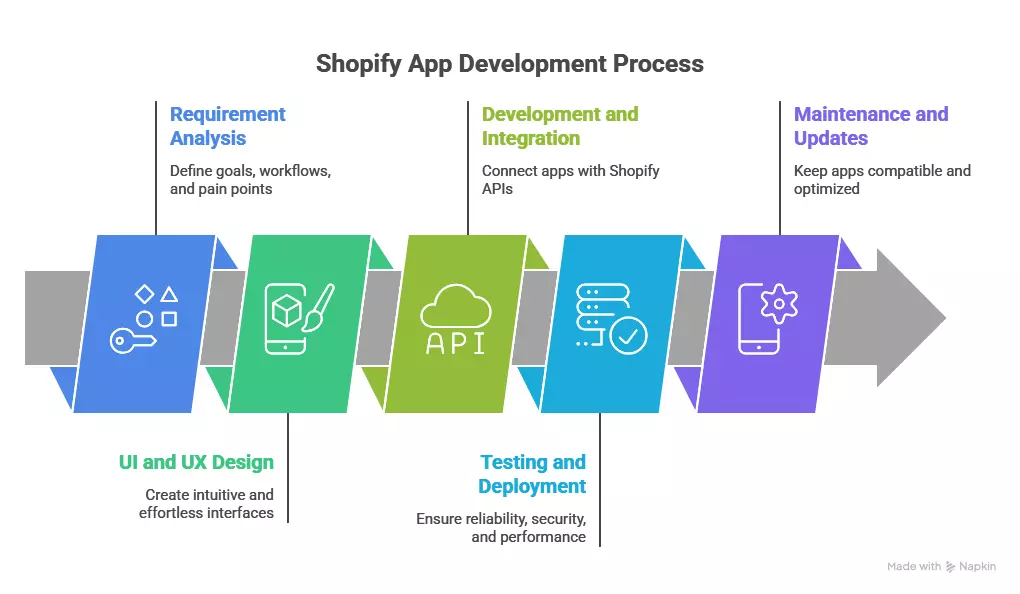
Shopify App Development Process
Requirement Analysis
This phase defines goals, workflows, and pain points. Clear planning reduces development time, cost, and future revisions.
UI and UX Design
Well designed apps feel intuitive and effortless. Clean interfaces and logical flows improve adoption and usability for both merchants and customers.
Development and Integration
Developers use Shopify APIs to connect apps with products, orders, customers, payments, and external services.
Testing and Deployment
Every scenario is tested to ensure reliability, security, and performance across devices and use cases.
Maintenance and Updates
Shopify evolves rapidly. Ongoing maintenance ensures your app remains compatible, secure, and optimized.
Technologies Used in Shopify App Development
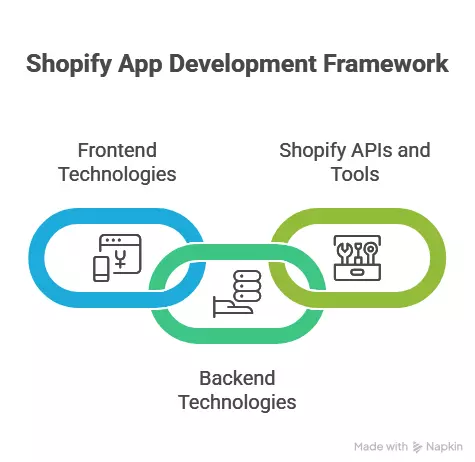
Frontend Technologies
React, Shopify Polaris, and modern JavaScript frameworks dominate app interfaces, ensuring fast and consistent user experiences.
Backend Technologies
Node.js, Ruby on Rails, and PHP are commonly used to handle server side logic and integrations.
Shopify APIs and Tools
REST APIs, GraphQL, webbooks, and Shopify CLI enable advanced app functionality and real time data handling.
Shopify App Store Guidelines in 2026
Security and Performance Standards
Shopify enforces strict rules around data privacy, secure authentication, and app performance to protect merchants and customers.
User Experience Expectations
Apps must be intuitive, fast, and reliable. Poor user experiences often lead to rejection or removal from the App Store.
Choosing the Right Shopify App Development Partner
Experience and Expertise
Choose a partner with proven Shopify and eCommerce experience, not just general development skills.
Support and Scalability
Your app should grow with your business. Reliable post launch support is essential for long term success.
Common Challenges in Shopify App Development
API Limitations
Understanding Shopify’s API rate limits and best practices helps prevent performance issues.
App Approval Delays
Public apps must meet Shopify’s review standards. Poor documentation or UX issues can delay approval.
Shopify App Development Trends in 2026
AI Powered Apps
AI driven recommendations, predictive analytics, and smart automation are becoming standard features.
Headless Commerce Integration
More brands are separating frontend and backend systems to achieve faster and more flexible experiences.
Subscription Based Apps
Recurring revenue models continue to dominate the Shopify App Store ecosystem.
How Custom Shopify Apps Improve Conversion Rates
Personalized User Journeys
Custom logic adapts the shopping experience to user behavior, increasing engagement and conversions.
Faster Store Operations
Optimized workflows reduce friction, improve speed, and create smoother customer experiences that drive sales.
Future of Shopify App Development
Shopify Plus and Enterprise Growth
Enterprise merchants demand advanced automation, integrations, and performance optimization.
Global Expansion Opportunities
Apps supporting multi currency, multi language, and regional compliance are in growing demand.
Conclusion
Shopify app development in 2026 is defined by flexibility, performance, and personalization. Whether you are scaling a DTC brand, optimizing operations, or building a SaaS product, the right Shopify app can transform your growth trajectory. When ready made solutions fall short, investing in custom Shopify app development becomes a strategic move that delivers long term value, control, and competitive advantage.